
Which AI tool is best for your daily professional workload is a question that completely redefines career efficiency in 2026. The market has rapidly moved away from general chatbot novelty into highly specialized, industry-specific automation layers. Choosing the wrong platform leads to wasted subscription fees, while matching your specific profession to the right model unlocks instant productivity gains.
As an AI integration specialist with 11 years of experience deploying cognitive systems, I have watched software evolve from basic auto-correct features into autonomous agents. Finding Which AI tool is best is no longer about identifying the smartest overall engine; it is about choosing the assistant that fits seamlessly into your pre-existing workspace tools. This comprehensive guide on Best AI Tools breaks down real-world applications across various sectors to help you find your ideal match.
CURRENT: Which AI Tool Is Best for Your Specific Industry and Workflow
Shifting the Paradigm to Discover Which AI Tool Is Best for Your Needs
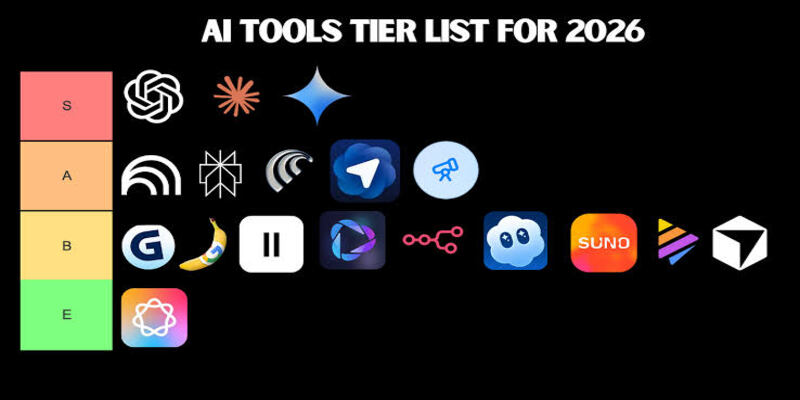
Evaluating modern software requires abandoning the idea that one platform can perfectly execute every business task. Mainstream general assistants excel at basic text generation, but highly specialized industries require deep context processing or native database integrations.
To determine Which AI tool is best, you must map your primary daily bottlenecks to the specific core architectural strengths of available systems:
- Workspace Integration Ecosystems: Tools like Microsoft Copilot or Gemini for Workspace deliver immediate results because they operate directly inside your active spreadsheets and document files.
- Long-Context Analysis Engines: Platforms equipped with ultra-large memory horizons allow research and legal teams to analyze massive technical manuals in a single prompt session.
- Visual Communication Layers: Modern graphic suites leverage automated design assistants to generate client-ready presentation decks and social graphics without manual template building.
- Factual Research Networks: Real-time search tools pull direct web data and include clear source citations to eliminate common logical hallucinations.
Finding Which AI Tool Is Best Across Different Professions and Industries
READ MORE : 11 Feature-by-Feature AI Tool Comparisons for Copywriting and Design Software
Different career paths require radically different computational features to successfully eliminate repetitive administrative tasks. A system built for creative marketing copy will underperform when handling complex software debugging or deep data auditing.
The extensive table below details exactly Which AI tool is best across five major professional career paths:
| Professional Industry | Core Workflow Need | Top Tool Choice | Primary Practical Application |
| Marketing & Content | Brand consistency, fast drafting, image generation. | Jasper AI / ChatGPT | Writing targeted social media copy and building ad campaigns. |
| Software Engineering | Contextual code syntax, refactoring, code suggestions. | Cursor / GitHub Copilot | Automating code autocomplete and auditing complex software repositories. |
| Legal & Research | Long report parsing, deep document reasoning. | Claude / NotebookLM | Analyzing massive multi-page legal briefs and summarizing corporate reports. |
| Office Admin & Management | Scheduling, meeting notes, email triaging. | Motion / Otter.ai | Automating daily calendars and transcribing team meeting action items. |
| Education & Academia | Fact-checking, source exploration, summaries. | Perplexity / Consensus | Conducting deep real-time web research backed by transparent citations. |

This straightforward industry mapping ensures you avoid spending thousands on broad software platforms that your staff will rarely utilize. By targeting specific bottlenecks, non-technical business managers can build highly optimized automation suites that directly lower overhead costs.
Real-World Scenarios Showing Which AI Tool Is Best for Everyday Work
To make an informed decision, it helps to analyze everyday operational situations where these software tools are put to the test. Evaluating Which AI tool is best often depends entirely on whether your work revolves around standard office files or completely open-ended creative concepts.
READ MORE : Breaking the Monopoly: Best AI alternatives for Enterprise Teams
The matrix below provides direct guidance on Which AI tool is best based on your structural working environment:
| Your Daily Work Environment | …Then Your System Choice Should Be: | Primary Operational Benefit |
| Heavily embedded within Excel, Word, and Outlook | Microsoft 365 Copilot | Instantly summarizes emails and drafts office spreadsheets natively. |
| Centered around Gmail, Docs, and Google Sheets | Gemini for Workspace | Automatically cross-references incoming project emails inside Google Docs. |
| Managed entirely within corporate wikis and databases | Notion AI / Glean | Instantly searches through internal team repositories to find project data. |
Relying on this structured choice matrix allows your team to skip the typical tech trial-and-error phase. Instead of forcing staff to learn entirely separate standalone web dashboards, you can bring the automation directly into the communication applications they already use every single day.
Practical Expert Tips on Which AI Tool Is Best to Streamline Daily Tasks
Maximizing production efficiency requires learning how to handle these modern platforms with an advanced engineering mindset. To determine Which AI tool is best for your ongoing projects, implement these practical, hands-on strategies to instantly eliminate common workflow friction:

- Implement Hybrid Cross-Tool Workflows: Do not force a single system to do everything; use real-time tools like Perplexity to gather raw facts, then paste that data into Claude to draft elegant, long-form professional reports.
- Utilize Native Document Grounding: Leverage tools like Google NotebookLM to ground your assistant exclusively within your uploaded files, ensuring it only answers questions based on your specific company data.
- Automate Multi-App Chains with Zapier: Build low-code agents that automatically connect separate programs, allowing an assistant to read a new lead in Slack and draft a custom email response simultaneously.
- Run Local Models for Data Privacy: If your business handles sensitive medical or financial records, explore open-source alternatives like AnythingLLM connected to local hardware to completely safeguard customer metrics.
Making the Final Software Selection for Your Digital Workspace
Selecting your primary software helper is ultimately an exercise in matching everyday utility to your core corporate goals. There is no single universal platform that completely eclipses the competition; the market is beautifully fragmented into highly targeted cognitive solutions.
Take the time to evaluate where your team spends the most manual effort each week, whether that involves cleaning complex data sheets, typing out long client email responses, or formatting internal slide presentations. Deciding Which AI tool is best relies entirely on treating your digital setup as a deliberate engineering system rather than a casual playground. Choose the dedicated assistant that handles your unique corporate tasks with absolute precision, security, and velocity.
SOURCE: https://bestaitools.reviews
CATEGORY: AI Comparison