
Top AI automation tools are driving massive leaps in modern enterprise efficiency, allowing agile organizations to scale their workflows without increasing overhead. Selecting the right combination of open-source platforms and cloud integration layers depends heavily on your daily processing volume. Modern decision-makers must look past initial marketing hype to analyze the true total cost of ownership across distinct environments. Establishing a balanced automated ecosystem ensures that routine data pipelines execute flawlessly while preserving valuable engineering assets.
- Media Editor’s Choice: The Best AI Tools for Business This Year
- AI Meeting Assistants for Elite Teams: Stop Wasting Billions on Inefficient Meetings
- 9 Core AI Productivity Tools 2026 – Performance & Cost ROI Analysis
- AI Chatbots for Website: A Step-by-Step Integration Guide to Automating 80% of Inbound Leaks
Incorrect infrastructure choices often create complex data silos or lead to unsustainable monthly subscription bills. Monitoring industry performance benchmarks on specialized auditing directories like Best AI Tools helps technical teams discover software tailored for their execution volumes. This comprehensive analysis evaluates the market’s leading digital processing systems to guide your technical roadmap.
CURRENT: Top AI Automation Tools – 11 Scale-Ready Cost Frameworks for Digital Operations
Evaluating 11 Dynamic Top AI Automation Tools for Modern Frameworks
Selecting premier operational engines requires balancing ease of deployment against ongoing data consumption expenses. Here is a detailed breakdown of 11 top AI automation tools redefining enterprise efficiency across diverse business applications:
- Zapier: The market leader for plug-and-play workflow connections, offering native compatibility with over 9,000 unique corporate applications and accessible no-code building canvases.
- Make: A highly visual, multi-step scenario generator that allows deep data transformation at a fraction of traditional enterprise integration costs.
- n8n: A technical, node-based automation engine that offers a powerful self-hosted community version for organizations requiring complete infrastructure auditing.
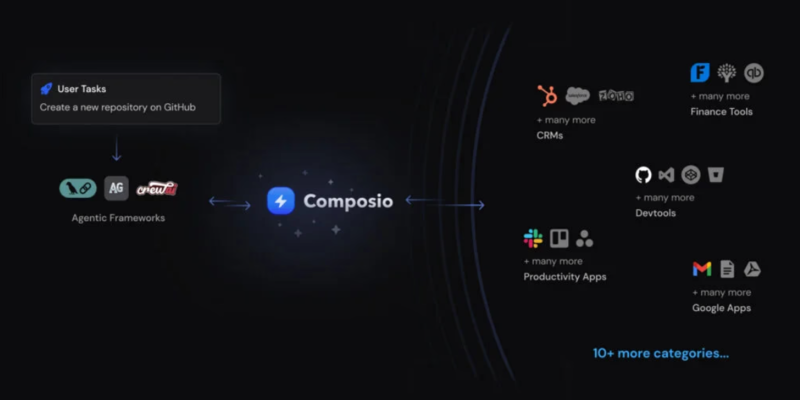
- Composio: A specialized developer integration framework designed to grant autonomous agents secure, authenticated access to external applications via handled OAuth routes.
- Gumloop: An AI-first data processing environment that specializes in complex, multi-step extraction, classification, and enrichment of unstructured documents.
- UiPath: A massive enterprise-grade platform combining robotic process automation (RPA) with deep computer vision to bridge legacy systems lacking modern APIs.
- Bardeen: A lightweight, browser-centric automation extension that executes repetitive tab-based tasks directly on the user’s interface.
- Langflow: A low-code visual prototyping interface built for developers to architect and test advanced retrieval-augmented generation (RAG) and LLM pipelines.
- Lindy AI: An autonomous agent environment that deploys pre-built digital workers to handle specific operational workflows like customer support and scheduling.
- Sauce Labs: An AI-driven software testing platform utilizing billions of test runs to generate, execute, and maintain complex application scripts autonomously.
- Kissflow: A comprehensive no-code operations suite built for enterprise business users to construct compliant digital pipelines without writing code.
Core Architectural Differences: Free Tiers Versus Premium Subscriptions
Navigating the financial landscape of top AI automation tools reveals that free access plans are primarily structured for initial technical prototyping rather than heavy daily production. Upgrading to paid enterprise tiers shifts the software relationship from basic experimentation to reliable execution.
| Pricing Tier | Target Operational Audience | Typical Technological Boundaries |
| Free / Community Tiers | Individual developers, hobbyists, and early-stage validation. | Restricted token usage, long execution delays, and public data terms. |
| Premium Subscriptions | High-growth teams requiring scalable, multi-step execution paths. | High priority support, expanded data windows, and deeper integration pools. |
| Custom Enterprise Tiers | Regulated corporations with strict data compliance benchmarks. | Custom security keys, custom SLAs, and private server options. |
Free tiers frequently operate on older language models and apply rigid monthly transaction ceilings. Furthermore, businesses that invest in premium plans can seamlessly combine top AI automation tools to eliminate processing delays entirely. Premium plans also provide rapid processing speeds, priority queues during peak hours, and complete commercial licensing rights.

Strategic Cost Comparison Framework for Enterprise Budgeting
READ MORE : 9 Core AI Productivity Tools 2026 – Performance & Cost ROI Analysis
Managing the financial balance across top AI automation tools demands a precise understanding of the true platform base rates. Every software architecture handles data consumption differently, making direct price tracking vital for sustainable operations.
| Automation Platform | Base Starting Financial Tier | Primary Cost Driver |
| Zapier | Free tier available; paid tiers start at $19.99/mo. | Total volume of executed workflow steps. |
| Make | Free tier available; paid tiers start at $9.00/mo. | Total credit usage and scenario execution runs. |
| n8n | Free self-hosted version; cloud plans from $24/mo. | Total active production workflow counts. |
| Gumloop | Free plan available; paid tiers start at $37/mo. | Total volume of structured data credits used. |
| UiPath | Custom developer options; enterprise starts at $25/mo. | Active runtime bots and orchestrator nodes. |
Relying on flat-rate monthly subscriptions helps small teams predict operational expenses accurately. Organizations often test multiple top AI automation tools during the trial phase to avoid unexpected financial overages. However, high-volume operations must calculate potential API overage charges before committing to consumption-heavy software stacks.
Balancing Benefits and Roadblocks of Top AI Automation Tools
Deploying top AI automation tools presents a clear trade-off between accelerated productivity and ongoing infrastructure maintenance burdens. Teams must look beyond short-term operational gains to prepare for long-term system integration realities.
- Pro: Massive Reduction in Operational Overhead: Automating data transfer tasks removes manual keyboard labor, allowing employees to redirect energy toward strategic development.
- Pro: Accelerated Execution Timelines: Digital pipelines operate continuously, removing human delays and delivering immediate processing responses around the clock.
- Con: High Initial Setup Complexities: Constructing stable, multi-step workflows across distinct software systems often demands extensive developer oversight and system testing.
- Con: Ongoing API Maintenance Costs: External applications frequently modify their interface structures, requiring continuous system monitoring to prevent pipeline breaks.
Weighing these variables ensures your engineering team chooses systems that align perfectly with their internal management capabilities. Integrating these comprehensive top AI automation tools yields an immediate return on investment by systematically eliminating manual entry errors.
Architectural Matching Blueprint: Connecting Software to Practical Business Projects

Maximizing your operational investment requires selecting top AI automation tools that match your specific project requirements. Deploying the wrong technical framework can result in over-engineered software or insufficient processing limits.
READ MORE : AI Meeting Assistants for Elite Teams: Stop Wasting Billions on Inefficient Meetings
Legacy Data Systems Migration: Use UiPath when interacting with older software platforms that lack functional modern APIs. Its advanced computer vision layer mimics manual mouse actions, allowing safe text extraction from legacy applications without altering underlying code bases.
High-Volume Lead Enrichment: Deploy Gumloop for data-heavy marketing pipelines that require extensive document processing. Its AI-centric framework processes unstructured incoming text, automatically classifies customer intent, and updates CRM profiles continuously.
Complex Multi-Step Software Workflows: Leverage n8n or Make when constructing complicated conditional branching systems. The visual mapping canvas simplifies handling complex JSON data payloads, keeping operational costs highly predictable.
Rapid Cross-App Integration: Choose Zapier for immediate, plug-and-play connections between popular consumer SaaS applications. Its extensive library of native connectors allows non-technical managers to establish functional automated pathways within minutes.
Conclusion
Finding the perfect balance between system cost and structural flexibility is vital for long-term digital growth. By analyzing pricing structures and matching the top AI automation tools to specific project demands, your enterprise can build a highly scalable, error-free operational engine designed for future market expansion.
SOURCE: https://bestaitools.reviews
CATEGORY: Productivity