The generative art landscape has experienced a dramatic evolution over the last several quarters. Entering 2026, the historic Midjourney vs DALL-E rivalry has fully matured into highly professional, industrial-grade design systems.
As an AI integration specialist with 11 years of experience handling enterprise media deployment, I have watched visual engines transform from low-resolution novelty grids into robust production standards. Choosing between these platforms directly influences your creative output, processing expenses, and system integration workflows on Best AI Tools.
CURRENT: Midjourney vs DALL-E: 3 Critical Quality Differences in 2026
Analyzing the 3 Critical Quality Dimensions Shifting the Midjourney vs DALL-E Balance
Evaluating image generation software requires looking past basic aesthetic appeal. Modern production metrics dictate that a true design asset must possess strict compositional consistency, correct internal typography, and organic texture fidelity. The modern Midjourney vs DALL-E landscape shows that both engines have chosen radically divergent technical philosophies to achieve these goals.
The primary differences in image output quality can be synthesized into three foundational categories:
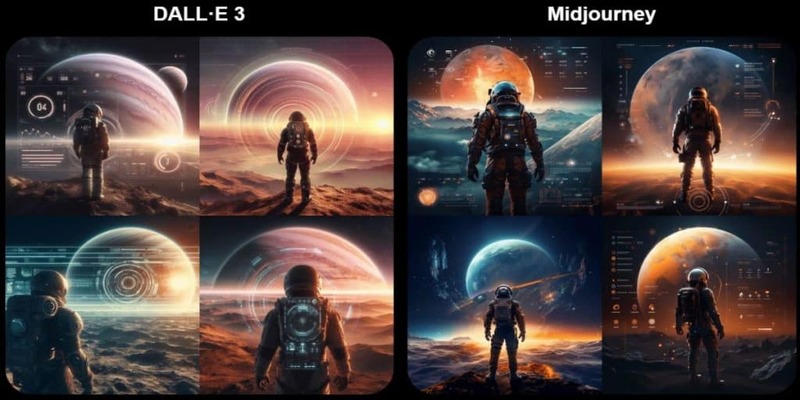
- Organic Texturing versus Vector Cleanliness: One platform focuses on replicating physical imperfections like lens flare, skin pores, and real-world lighting, while the other outputs perfectly clean, smooth stock-style vectors.
- Typographic Integration and Font Alignment: Rendering readable words inside complex graphics remains a major challenge. OpenAI’s architecture handles multi-word copy with near-perfect spelling, while its rival struggles with long text strings.
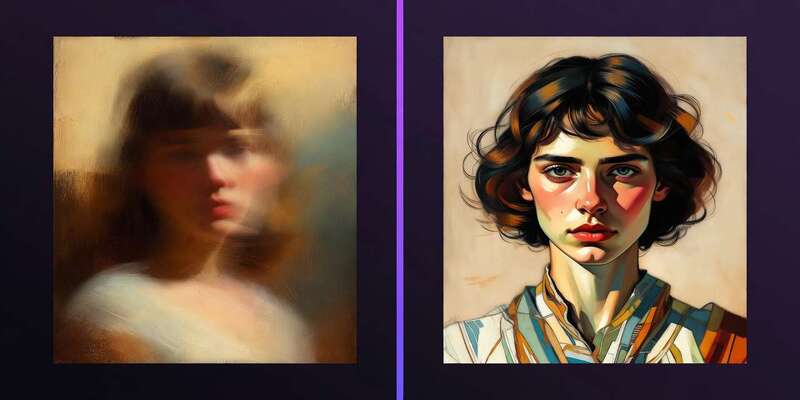
- Artistic Style Comprehension and Depth: True stylistic execution means shifting the entire lighting environment, brush technique, and color palette rather than merely applying a superficial visual filter over an image.
Understanding these core technical differences prevents teams from misallocating their creative budgets. If your business produces cinematic media or conceptual illustrations, you need a system that mimics natural artistic taste. If your agency requires technical diagrams, web user interfaces, or heavily labeled social media ads, your priority shifts completely toward exact spatial instruction following.
A Detailed and Practical Comparison of Real-World Midjourney vs DALL-E Creative Output
READ MORE : Breaking the Monopoly: Best AI alternatives for Enterprise Teams
To provide a helpful, clear, and easy-to-understand breakdown for creative studios, we must look at how these platforms perform during daily production tasks. When we pitch Midjourney vs DALL-E against each other using identical commercial prompts, the structural trade-offs become immediately obvious.
The table below offers a direct, practical comparison of how these visual architectures perform across common creative tasks:
| Evaluation Category | Midjourney V8.1 Capabilities | OpenAI GPT Image 2 Capabilities | Best Practical Use Case |
| Photorealism Level | Cinematic depth, realistic skin textures, authentic lens bokeh. | Smooth, clean, and technically precise stock-style renders. | Midjourney for human portraits; OpenAI for product renders. |
| Text Rendering | Reliable for 2–3 words using quotes; struggles with long phrases. | Flawless multi-word copy alignment with multilingual support. | OpenAI for ad banner layouts and marketing graphics. |
| Prompt Adherence | Tends to creatively reinterpret instructions for better style. | Follows every listed variable with literal spatial accuracy. | OpenAI for highly specific, complex commercial briefs. |
Working with these systems reveals that they serve entirely different professional profiles. Designers who prefer to act as art directors usually choose the V8.1 engine because it injects immediate cinematic composition into rough drafts. On the other hand, marketing operators who need a quick layout that exactly matches a rigid client brief rely on OpenAI’s conversational refinement loop.
Balancing Production Scalability and API Management in Midjourney vs DALL-E
Beyond raw visual quality, implementing an automated asset generation pipeline requires checking model management and cost efficiency. Enterprise tech leaders face a clear divide when setting up a scalable Midjourney vs DALL-E workflow.
The operational infrastructure of both companies has adapted to separate production demands:
- API Automation Hubs: OpenAI offers highly scalable, enterprise-grade endpoints with built-in copyright protection and clear per-image pricing structures. Midjourney now features an official developer API alongside its web interface, offering massive volume discounts via flat-rate subscriptions.
- Canvas Modification Tools: Both platforms support rapid in-painting, canvas expansion, and localized object replacement via interactive web interfaces.
- Visual Consistency Frameworks: Midjourney uses dedicated reference tags like –cref and –sref to maintain character and style uniformity across different scenes. OpenAI achieves consistency via interactive natural language prompts within the same chat workspace.
READ MORE : 11 Feature-by-Feature AI Tool Comparisons for Copywriting and Design Software
The choice between a flat-rate plan and a per-image API model dramatically impacts your long-term return on investment. Concept design teams creating hundreds of variations per day save significant capital using flat-rate plans. Conversely, platform developers building consumer apps require the structured API pay-as-you-go architecture of OpenAI.
Making the Final Integration Decision for Your Media Pipelines
Navigating the Midjourney vs DALL-E environment requires discarding brand sentimentality and evaluating pure systemic output. There is no single winner; instead, there are two highly optimized tools designed for completely different creative philosophies.
The secondary decision matrix below simplifies your final software selection based on your primary production demands:
| If Your Production Focus Involves… | …Then Your Primary System Choice Should Be: |
| High-end fashion mockups, cinematic mood boards, or editorial visuals | Midjourney V8.1 (for superior artistic quality and lighting control). |
| Social media ads, web banners, logos, or labeled graphic layouts | OpenAI GPT Image 2 (for perfect typography and literal prompt adherence). |
| Scalable cloud apps with automated image creation triggers | OpenAI API (for standardized JSON calls and enterprise-grade security). |
Essential Production Tips for Masterful Image Generation
To push your creative limits, you must shift your focus toward advanced workflow mechanics instead of simple text inputs. Combining these targeted professional strategies directly ensures that your studio delivers optimal results under demanding deadlines:
- Multi-Model Layering: Render your main cinematic human characters using Midjourney to secure perfect lighting depth, then import that file into the DALL-E ecosystem to cleanly overlay complex typographic ad copy or clean vector web elements.
- Aesthetic In-Painting Control: Use Midjourney’s localized region editor along with strict aspect-ratio multipliers to fine-tune intricate clothing textures without altering your background structure.
- Literal Prompt Anchoring: When utilizing DALL-E, write clear structural blueprints detailing exact spatial layout positions to perfectly anchor your objects across multiple scene variations.
Implementing these advanced workflows allows your creative department to completely bypass individual software limits. Mastering these practical techniques helps your enterprise maintain an exceptional visual standard across the competitive Midjourney vs DALL-E landscape.
Building an optimized visual studio requires using each system where it excels. Many modern agencies now run a combined multi-model production pipeline. They use Midjourney to establish the overall aesthetic tone and render high-fidelity human subjects, then pass those assets into OpenAI’s workspace to handle exact vector expansions, graphic overlays, and text labels. Embracing this integrated approach helps your enterprise bypass individual model limitations and secure an unmatched creative edge in the evolving Midjourney vs DALL-E market.
SOURCE: https://bestaitools.reviews
CATEGORY: AI Comparison