
Top AI photo editors are fundamentally reshaping the economics of e-commerce storefronts by turning simple smartphone snapshots into high-converting, studio-grade digital catalog assets. In the highly competitive retail environment of 2026, brands are moving away from sluggish, expensive studio photography and shifting completely toward automated post-processing pipelines. Data shows that clean, contextually relevant imagery drives up to 23% higher conversion rates and improves product page click-through metrics significantly.
- Engineering AI Art Generator Prompts for Photorealistic Fashion and Textile Design
- Text to Image AI – A Complete Technical Tutorial on Multi-Platform Digital Art Generation
- 8 Best AI Image Generators Ranked by Commercial Design Efficiency
- 5 Best Free AI Image Software Options for Local PC Deployment
- Demystifying AI Graphic Design Tools: Architectural Mechanics, Pros, Cons, and Workflows
When analyzing creative software capabilities for our professional curation hub at Best AI Tools, we evaluate image software based on commercial conversion utility. The primary operational objective is to isolate tools that maintain strict product integrity while injecting flawless atmospheric lighting, shadow generation, and professional background structures.
CURRENT: 9 Top AI Photo Editors to Maximize Your Product Asset Conversions
Defining the Baseline Benchmarks for Commercial Post-Processing Software
To select the most efficient infrastructure for digital retail catalogs, enterprise teams must assess automated platforms beyond simple filtration mechanics. The top AI photo editors optimized for digital storefront conversion metrics must master three non-negotiable processing criteria: anatomical preservation, pixel-level edge masking, and accurate perspective rendering. If an algorithm alters your physical item’s true color balance or distorts product labels, it introduces immediate return risks and damages customer trust.
The following data table contrasts the functional requirements of industrial e-commerce visual pipelines against basic consumer photo apps:
| Operational Metric | Industrial Post-Processing Requirements | Standard Consumer Filtering Apps |
| Edge Precision | Flawless multi-layer separation on transparent or textured borders. | Soft, blurry masking lines that create artificial visual artifacts. |
| Lighting Integration | Adaptive directional shadow matching based on replacement geometry. | Static flat backgrounds lacking realistic physical drops. |
| Catalog Uniformity | Style-locking recipes that preserve tone profiles over hundreds of files. | Fragmented, independent processing that causes color variance. |
| Batch Automation | Simultaneous background swapping for high-volume asset drops. | Slow manual configurations restricted to one canvas at a time. |
The 9 Top AI Photo Editors Ranked by E-Commerce Conversion Lift
Isolating the right editing engine requires finding specialized tools tailored to specific commercial marketing outputs. While generalized graphic suites offer excellent secondary touch-up options, dedicated e-commerce platforms maximize your return on investment by focusing directly on conversion-optimized visual generation.
Adobe Photoshop (Firefly Integration)
READ MORE : Breaking Down the Top AI Automation Software Download Options for PC
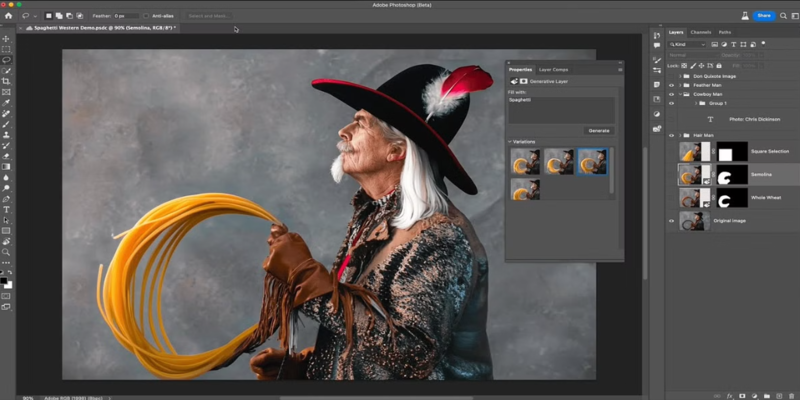
Operating as the undisputed industry standard for professional design studios, this environment pairs pixel-level manual manipulation with deep generative tools. It remains one of the top AI photo editors due to its advanced Generative Fill capabilities, allowing commercial designers to safely expand product canvases or add hyper-realistic contextual elements via text command.
- Pixel Integrity: Delivers unmatched control over high-resolution print assets without losing textures.
- Workflow Safety: Fully indemnified commercial training ensures complete corporate copyright protection.
- Advanced Masking: Industry-leading neural selection layers perfectly isolate hair, fur, and intricate jewelry wires.
Photoroom
Sellers managing high-volume, mobile-first marketplace storefronts consider this specialized app an indispensable asset for rapid visual deployments. It stands among the top AI photo editors because its lightning-fast background removal algorithm can instantly standardize an entire inventory batch directly from a phone interface.
- Batch Extraction: Process dozens of flat-lay images simultaneously with uniform white background drops.
- Shadow Modeling: Smart physics engines automatically calculate realistic drop shadows beneath product bases.
- Ghost Mannequin Mode: Seamlessly combines layered apparel shots to create floating 3D garment visuals.
Pixlr
Operating entirely within web browsers, this platform provides a zero-installation alternative that balances deep canvas controls with modern generative tools. Backed by cutting-edge model weights like Flux and Recraft, it offers budget-conscious teams desktop-grade layer editing without hardware limitations.
- Browser Agility: Run complex generative expansions and color grading setups from any low-spec machine.
- Permanent Access Tiers: Offers substantial design utility without forcing immediate recurring premium commitments.
- Object Removal: Quick AI brush systems isolate and erase unwanted studio dust or packaging reflections instantly.
Pixora
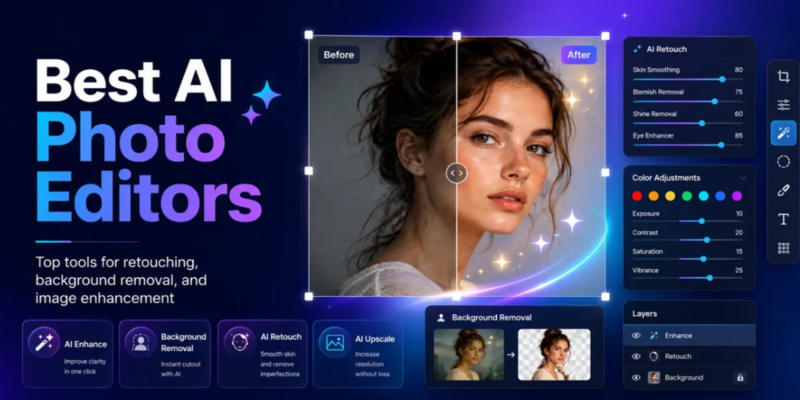
Built exclusively around the specific constraints of e-commerce listings, this engine eliminates complex text prompting in favor of intelligent visual templates. Many modern multi-channel retail brands classify this tool among the top AI photo editors for scaling social media advertisement variations instantly.
- Prompt-Free Execution: Select tailored retail categories like “Luxury Cosmetics” to apply targeted scene lighting.
- Catalog Alignment: Guarantees absolute consistency across multiple product variants by locking ambient values.
- Marketplace Optimization: Automatically scales final exports to meet exact compliance rules for major global retailers.
Nightjar
Branding agencies requiring strict, custom visual consistency choose this specialized engine to manage enterprise-scale catalog aesthetics. As one of the top AI photo editors for scaling corporate brand assets, the platform approaches visual production through modular recipes, turning specific lighting, model, and camera angles into reusable components.
- Style Locking: Save highly specific brand guidelines to enforce matching visual tone profiles over years of inventory updates.
- Composition Control: Enforce rigid product alignment parameters to keep website scroll-grids beautifully uniform.
- Multi-Model Sync: Easily map flat garment assets onto various virtual fashion models while keeping fabric drapes realistic.
WearView
READ MORE : Demystifying AI Graphic Design Tools: Architectural Mechanics, Pros, Cons, and Workflows
Specializing purely in fashion photography pipelines, this platform automates the complex task of generating lifestyle apparel images from basic product shots. It drastically cuts production costs by instantly converting simple hanger photos into realistic lookbook scenes.
- Virtual Try-On: Automatically maps flat clothing items onto hyper-realistic AI models in under fifteen seconds.
- Pose Control: Adjust subject positioning to highlight specific garment features like deep pockets or tailored hems.
- Video Generation: Transforms static garment designs into short, social-ready marketing clips that increase ad conversion metrics.
Canva (Magic Studio)
Ideal for small business owners and marketing managers, this platform brings powerful automated image manipulation tools into a mass-market graphic suite. When comparing the top AI photo editors for rapid presentation and banner creation, this platform stands out due to its template integration.

- Magic Expand: Seamlessly stretch vertical phone captures into widescreen banners without distorting central product geometry.
- Direct Asset Layouts: Instantly drop edited photos into print-ready newsletters, promotional flyers, or Instagram formats.
- Simplified Retouching: Drag-and-drop brushes make adjusting item sizing or color variants accessible to any user level.
AdStellar
Connecting creative post-processing directly to ad performance data, this unique platform is built specifically for pay-per-click conversion optimization. It tracks consumer performance metrics across channels to guide its built-in image enhancements.
- Performance Predictions: Internal analytic models score product visuals based on active click-through data before launching campaigns.
- Format Autopilot: Automatically formats contrast ratios and focal boundaries to fit various ad placement zones.
- A/B Variant Generation: Creates slight visual adjustments to let marketing teams test different lifestyle backgrounds systematically.
Claid.ai
Designed for larger developer operations and high-volume multi-vendor platforms, this engine offers powerful automated image restoration through simple code integration. Large online marketplaces group this developer toolkit with the top AI photo editors due to its robust API automation capabilities.
- API-Driven Automation: Connect directly to database backends to process thousands of merchant uploads hourly.
- Super-Resolution Upscaling: Intelligently reconstructs blurred textures to ensure blurry product images meet high-definition standards.
- Smart Background Alignment: Automatically resizes, centers, and balances lighting for unpredictable marketplace listings.
Choosing the Ideal Post-Processing Ecosystem for Your Storefront
Selecting the appropriate workflow tool from the available options requires matching your specific catalog size against your daily output constraints. High-end apparel brands processing fewer items with complex textures should prioritize deep manual tools like Photoshop to preserve macro detail integrity. Meanwhile, high-volume drop-shippers managing thousands of rotating listings will achieve better return metrics by using automated batch suites like Photoroom or Claid.
Ultimately, maximizing product conversions relies on eliminating visual distractions and helping online shoppers accurately visualize their purchases. By deploying the top AI photo editors within an organized post-processing strategy, creative directors can eliminate traditional production bottlenecks and build highly efficient, scalable visual ecosystems that turn casual traffic into loyal customers.
SOURCE: https://bestaitools.reviews
CATEGORY: AI Design