
An AI content generator is reshaping how digital publishers balance scale and substance in a competitive market. Today, simply churning out repetitive text no longer guarantees visibility or audience trust. Here at Best AI Tools, we regularly analyze how modern language architectures reshape the media landscape. Understanding the inner mechanics of automated software allows savvy marketing teams to move past generic prompting and unlock true editorial value.
- 5 Transformative Tips to Optimize Your AI Writing Desktop App Workflow
- Best AI Paraphrasing Tool – 11 Advanced Platforms Tested and Compared
- Free AI Essay Writer Software Ranked by Natural Human Academic Cadence
- 6 AI Copywriting Software Tools for Every Marketing Budget Compared
- 15 Best AI Writing Tools Reviewed: We Tested Them for Copywriting & SEO
The transition from basic sentence completion to nuanced, multi-layered text generation marks a significant evolution in software capabilities. Advanced platforms now evaluate semantic context, brand identity, and structural logic simultaneously. This deep dive dissects how next-generation automated writing systems function under the hood to produce high-performing asset classes.
CURRENT: Deep Dive into the Modern AI Content Generator: The Architecture of Quality Output
Understanding the Internal Engine of a Modern AI Content Generator

At its core, a modern AI content generator relies on sophisticated neural networks trained on massive textual datasets. These machine learning models do not think like humans; instead, they compute the statistical probability of sequential words. By predicting the most contextually appropriate next phrase, the automated software forms coherent paragraphs that mimic human writing styles.
- Probabilistic Modeling: Algorithms calculate word sequences based on massive training datasets rather than actual human comprehension.
- Style Adaptation: Advanced systems apply tone guardrails to match specific brand guidelines, readability metrics, and structural rules.
- Real-Time Connectivity: Next-generation generators integrate live search engine results (SERP) to pull fresh data, ensuring factual accuracy.
The integration of real-time data represents a massive breakthrough in automated content creation. Instead of pulling data from static, outdated training logs, the utility connects directly to live web databases. This hybrid approach ensures that every drafted paragraph remains factual, highly relevant, and structurally optimized for current search patterns.
Algorithmic Evaluation of High-Quality Natural Language Synthesis
Evaluating text generation software requires looking past basic speed metrics to analyze how the platform processes complex inputs. High-quality outputs depend heavily on semantic parsing, prompt adherence, and localized language flow. When an experienced creator deploys an AI content generator, the underlying algorithms must interpret intent rather than just translating literal text strings.
READ MORE : 5 Transformative Tips to Optimize Your AI Writing Desktop App Workflow
Different software architectures yield varied results depending on the target medium. For instance, a system built for programmatic blogging focuses heavily on macro-level outlines and transition phrases. Conversely, automated systems designed for high-converting sales copy prioritize psychological triggers and concise bullet points.
| Core Algorithmic Component | Primary Technical Function | Direct Impact on Output Quality |
| Semantic Parsing | Interprets user prompt intent and stylistic nuances | Eliminates off-topic text and logical gaps |
| Context Windows | Tracks historical data across long textual drafts | Prevents internal contradictions in long-form copy |
| Temperature Controls | Adjusts randomness and linguistic creativity metrics | Balances factual precision against narrative engagement |
Understanding these internal settings enables editors to troubleshoot poor drafts effectively. If your automated writing assistant produces dry or repetitive text, adjusting the creative parameters within the software can instantly revitalize the narrative flow.
Tactical Integration of an AI Content Generator into Editorial Workflows
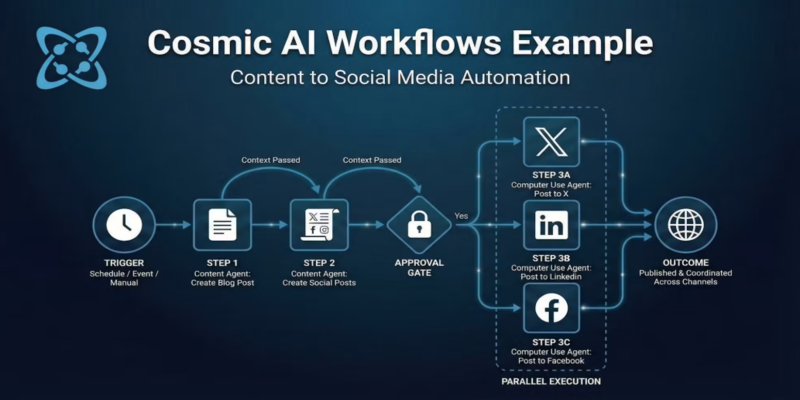
Transforming a raw AI content generator into a predictable asset requires a highly structured production pipeline. Relying entirely on automated software to build a final draft with a single prompt usually results in shallow material. Instead, elite agencies treat automated text generation platforms as collaborative research and drafting partners.
The initial stage of a professional workflow involves aggressive semantic mapping and structural outlining. Editors use data analytics tools to define necessary search intent signals and secondary key phrases. Once the blueprint is complete, specific sections are systematically processed through the automated system to maintain stylistic focus.
| Production Pipeline Stage | Human Editor Responsibility | AI Content Generator Responsibility |
| Phase 1: Strategic Planning | Competitor analysis, audience definition, and core mapping | Keyword clustering and initial brainstorming variations |
| Phase 2: Structural Drafting | Guardrail configuration and precise prompt engineering | Rapid text generation, section building, and data sourcing |
| Phase 3: Quality Assurance | Fact-checking, original storytelling, and brand voice injects | Alternative phrasing generation and grammar scanning |
Maintaining strict human-in-the-loop oversight guarantees that the final output preserves unique brand positioning. Writers must inject personal anecdotes, original data points, and exclusive expert quotes into the automated draft. This hybrid methodology ensures the final publication offers genuine value that algorithms cannot replicate on their own.
Optimizing Synthetic Text for Sophisticated Search Engine Algorithms
READ MORE : Free AI Essay Writer Software Ranked by Natural Human Academic Cadence
Search infrastructure continuously adapts to identify and devalue low-effort automated content. Modern ranking systems prioritize deep informational authority, clear user satisfaction, and unique expertise. Consequently, deploying an AI content generator requires a deep understanding of algorithmic content evaluation frameworks.
- Structural Variation: Avoid using the exact sentence length or paragraph density across multiple sections to bypass pattern filters.
- Search Intent Optimization: Address user queries clearly within the top folds of the article to secure featured snippet placements.
- Linguistic Diversity: Replace repetitive transition phrases with varied, natural vocabulary to enhance overall human-like readability scores.

Furthermore, focus heavily on answering user queries completely within the initial sections of your article. Advanced software tools can assist in creating direct answers for featured snippets, but human eyes must verify the clarity of those statements. Combining automated efficiency with rigorous human refinement allows your web properties to scale production securely.
The Evolution of Contextual Intelligence in Automated Writing Platforms
The future of digital publishing belongs to systems that possess deep contextual awareness and multi-modal integration. Next-generation AI content generator tools will move past basic text boxes to interact natively with complex corporate spreadsheets, live user feedback, and visual assets. This evolution allows the software to generate highly tailored reports and market analyses autonomously.
As automated writing applications become more integrated, the demand for generic copywriters will continue to decline. However, strategic content architects who understand how to orchestrate these automated systems will experience unprecedented leverage. Staying ahead of these technical shifts ensures your organization maintains a dominant digital footprint.
Ultimately, an AI content generator serves as an amplifier for human strategy rather than a wholesale replacement. By mastering prompt logic, workflow design, and algorithmic optimization, you turn automated software into a sustainable growth engine. Keep refining your operational balance to ensure your content machine remains highly profitable over the long term.
SOURCE: https://bestaitools.reviews
CATEGORY: AI Writing